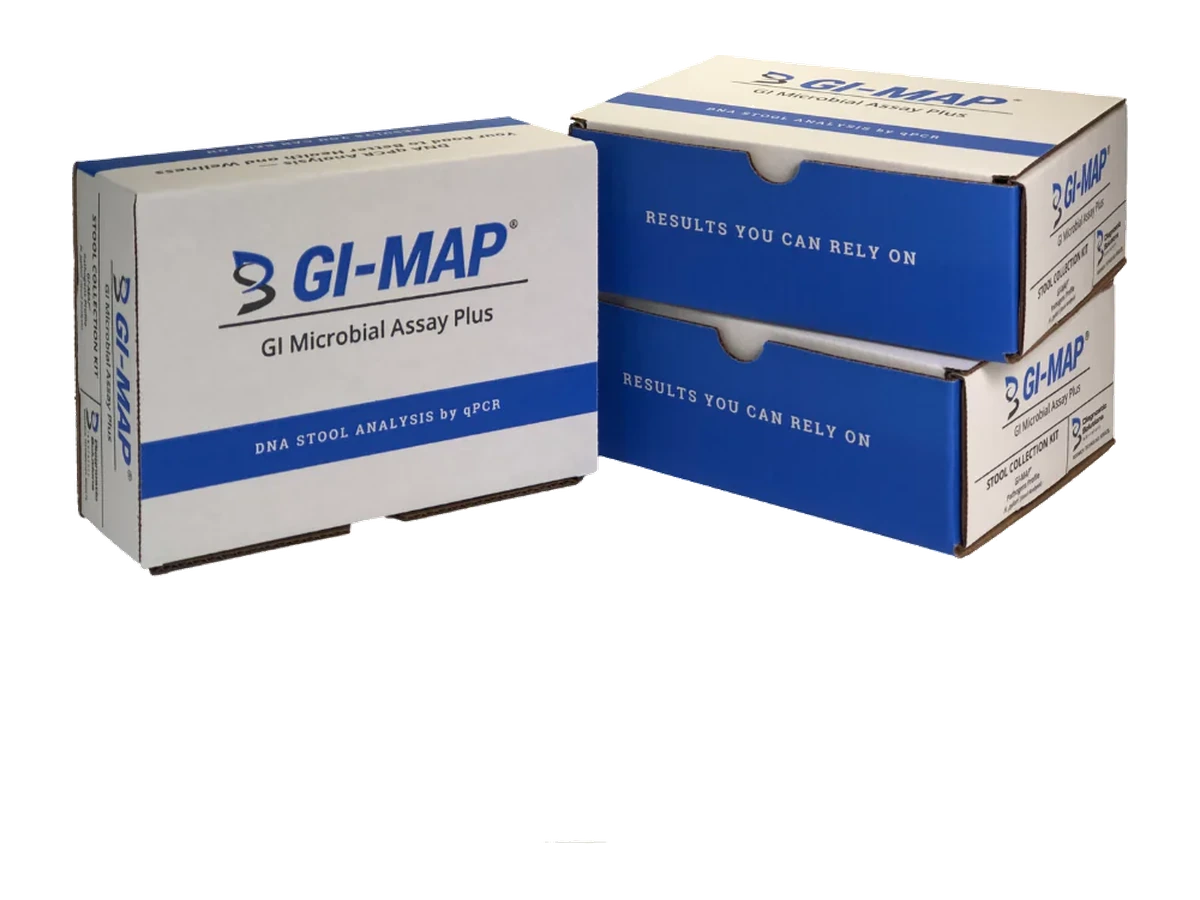
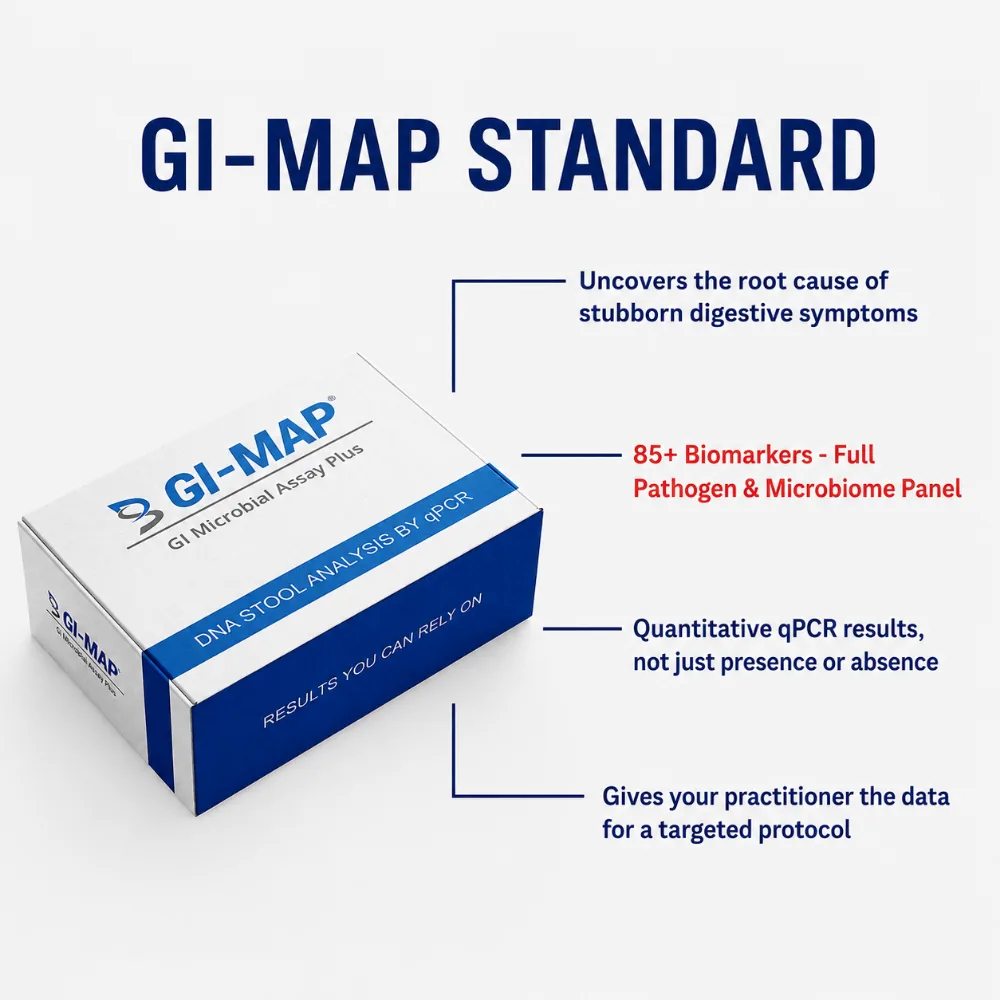
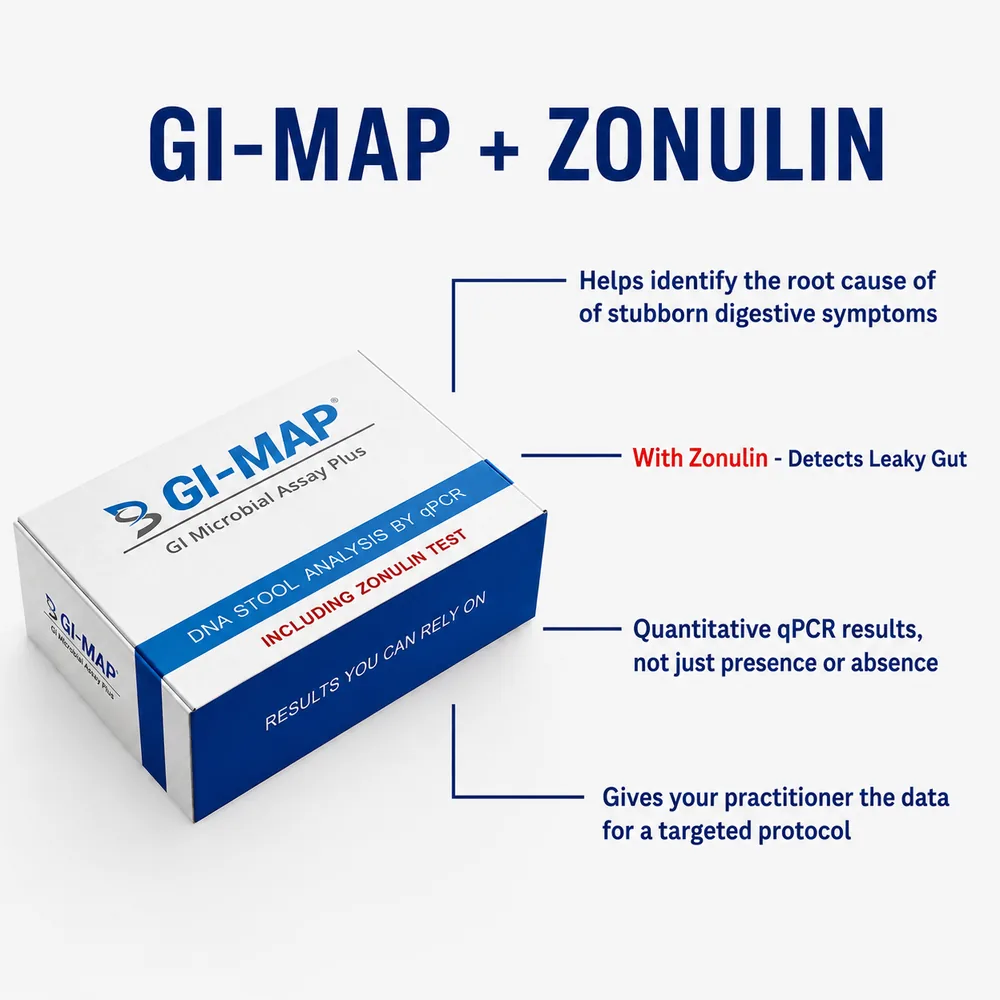
The GI-MAP — short for GI Microbial Assay Plus — is a comprehensive DNA-based stool analysis from Diagnostic Solutions Laboratory. Instead of trying to grow organisms in a dish, it reads the DNA in your stool with quantitative real-time PCR (qPCR) to identify and count the microbes and markers that shape gut health. From one sample it reports:
- Pathogenic bacteria, parasites and viruses
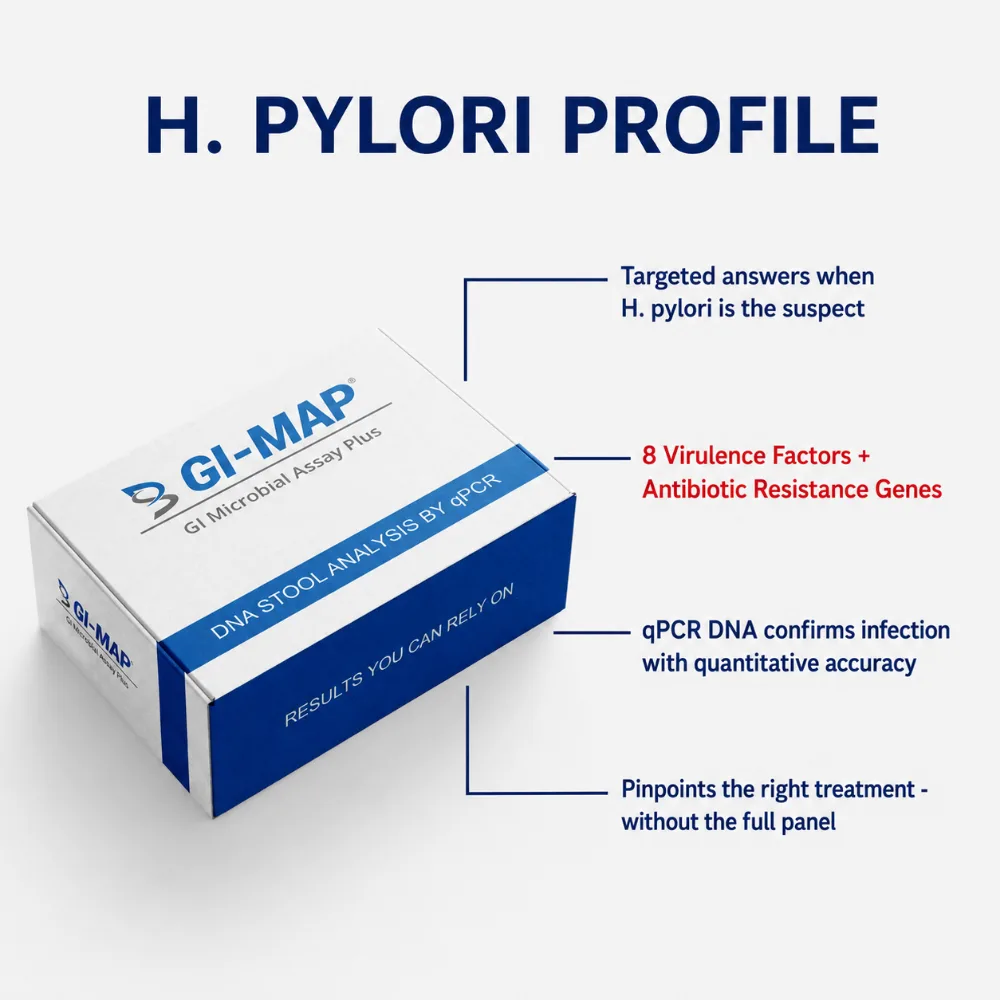
- Helicobacter pylori with its virulence factors
- Fungi and yeast such as Candida
- The balance of your commensal (beneficial) and opportunistic bacteria
- Functional markers of inflammation, immunity, digestion and gut-barrier integrity
Why qPCR and quantitative results matter
Conventional stool tests rely on culture or microscopy, which can miss organisms that are hard to grow or present in small numbers. qPCR instead targets specific DNA sequences, so it is highly sensitive and — importantly — quantitative: it tells you not just whether an organism is present, but how much.
That matters clinically. A practitioner can gauge the significance of a finding, prioritise what to address first, and — because the numbers are reproducible — re-test after a protocol to confirm whether levels actually changed. Large studies have shown that quantitative molecular (PCR) methods detect more enteric pathogens than traditional culture, which is part of why DNA-based testing has become central to functional-medicine gut work.